
A new US bill could reshape mining by bringing hardware production home, boosting local hashpower, and tying miners to a national Bitcoin reserve.
There’s a certain feeling you get when the wind shifts in mining. It’s subtle at first—just a few conversations, a couple of policy drafts, some noise on crypto Twitter. Then suddenly, it clicks: this isn’t noise, it’s direction. That’s exactly the vibe around the Mined in America Act, introduced on March 30, 2026, by Bill Cassidy and Cynthia Lummis.
And honestly, this one feels different.
Table of Contents
The uncomfortable truth miners already knew
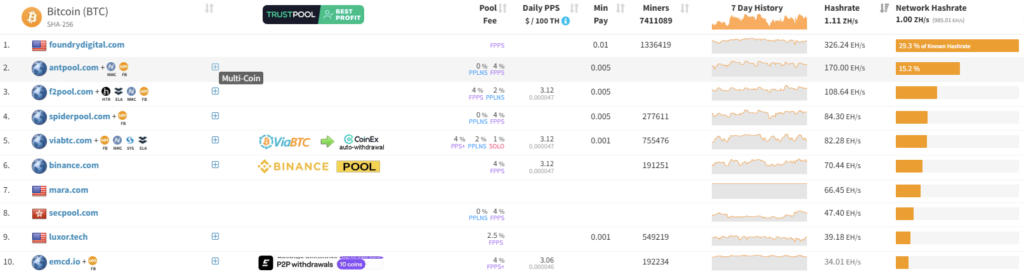
Let’s not pretend this is breaking news for anyone deep in mining. We’ve all known the dependency problem for years.
The United States may control roughly 38% of global Bitcoin hashpower, but when you open up the machines, follow the chips, trace the supply chains—almost all roads still lead back to China. Around 97% of ASIC hardware production sits there or within its sphere of influence.
That’s not just an economic detail. That’s a pressure point.
If you’ve ever waited months for rigs, dealt with firmware limitations, or watched geopolitical tensions ripple into hardware pricing, you’ve felt this fragility firsthand. Mining isn’t just about electricity anymore—it’s about logistics, sovereignty, and control.
And that’s exactly the gap this bill is trying to close.
“Mined in America” isn’t just branding
At first glance, the certification idea might sound like a marketing label. But dig a little deeper, and it’s more like a slow reprogramming of the mining stack.
The proposed voluntary certification would push farms and pools to gradually phase out hardware tied to “foreign adversaries.” That includes China, Russia, and others.
Voluntary—yes. But let’s be real: in mining, incentives shape behavior faster than rules.
Once certification starts unlocking benefits (and it will), it becomes less of a choice and more of a migration path.
You can already imagine how this plays out:
- Early adopters position themselves as “clean” hashpower
- Institutional players gravitate toward certified operations
- Pools begin signaling origin transparency
- Hardware sourcing becomes a reputational factor
We’ve seen similar dynamics before—just not at this geopolitical scale.
The real play: hardware reshoring
This is where things get serious.
The bill doesn’t just say “use American gear”—it tries to make that gear exist in the first place.
Through agencies like the National Institute of Standards and Technology, the US government wants to support domestic development of ASIC miners and chips. That means grants, technical assistance, and integration with manufacturing programs.
If you’ve been around long enough, you know how hard this is.
ASIC production isn’t something you spin up overnight. It’s capital-intensive, brutally competitive, and historically dominated by a handful of players. But here’s the twist: this isn’t a pure market play anymore. It’s a strategic one.
And when governments decide something is strategic, timelines compress.
We’ve seen it with semiconductors. We’re now seeing the same logic applied to mining.
Strategic Bitcoin Reserve: the quiet power move
This part might be the most underestimated.
The bill ties directly into the idea of a Strategic Bitcoin Reserve, reinforcing an executive direction reportedly aligned with Donald Trump’s administration.
Now think about what that means in practice.
Certified American miners could get priority access to sell freshly mined BTC into a national reserve. Not on the open market. Not through intermediaries. Directly.
That changes incentives in a big way:
- It creates a buyer of last resort
- It reduces market exposure for certain operators
- It introduces a quasi-sovereign demand layer for Bitcoin
And maybe most importantly—it reframes mining from a private activity into something bordering on national infrastructure.
That’s a philosophical shift as much as an economic one.
Energy, grids, and the “useful miner” narrative
Another layer here is energy integration.
We’ve been talking for years about how mining can stabilize grids, absorb excess energy, and act as a flexible load. This bill leans into that narrative hard.
Instead of treating miners as energy parasites (a narrative that still pops up in certain circles), it positions them as grid partners.
And from a miner’s perspective, that matters.
Because once you’re seen as infrastructure:
- You get different regulatory treatment
- You gain political allies
- You become harder to shut down
This isn’t just PR—it’s survival strategy.
Why this hits right now
Timing is everything, and this bill didn’t appear in a vacuum.
We’re in a moment where:
- Mining margins are tightening post-halving cycles
- Some large players are pivoting toward AI workloads
- Hardware efficiency gains are slowing down
- Regulatory clarity is still uneven globally
In that context, a policy that offers structure, incentives, and long-term direction is incredibly attractive.
Especially for US-based miners who’ve been navigating uncertainty while competing globally.
Industry reaction: cautiously optimistic

The early sentiment from miners and funds has been mostly positive.
And that makes sense.
On paper, this bill offers:
- Reduced geopolitical risk
- Preferential treatment for compliant operators
- Potential access to a sovereign BTC buyer
- Long-term infrastructure support
Of course, there are open questions.
Will domestic ASICs (not the 4nm ones) be competitive on cost and efficiency?
How fast can supply chains realistically shift?
Will certification become de facto mandatory over time?
But here’s the thing—miners don’t wait for perfect clarity. They position early and adjust later.
The bigger picture: mining grows up
If you zoom out, this isn’t just about America.
It’s about the next phase of mining.
We’re moving from:
- Scrappy, opportunistic setups
to - Structured, policy-aligned infrastructure
From:
- Globalized hardware dependence
to - Regionalized production ecosystems
From:
- Pure market dynamics
to - Strategic national involvement
And whether you love it or hate it, that evolution was probably inevitable.
Final thoughts from the trenches
From where I’m sitting, this feels like one of those moments we’ll look back on and say, “Yeah, that’s when things started to shift.”
Not overnight. Not dramatically. But directionally.
If the Mined in America Act gains traction, it won’t just boost US mining—it’ll force the rest of the world to respond. Europe, the Middle East, Asia—everyone will start asking the same question:
Do we control our hashpower, or just host it?
And for miners, the takeaway is simple:
This industry is no longer just about who has the cheapest electricity or the most efficient rigs.
It’s about alignment—economic, political, and technological.
And the ones who see that early?
They’re usually the ones still standing when the dust settles.